Sewer Credits for Water That Never Reaches the Sewer
Deduct evaporative cooling tower loss from municipal sewage bills. Cellular ultrasonic meters deliver audit-ready proof without gateway or IT maintenance.
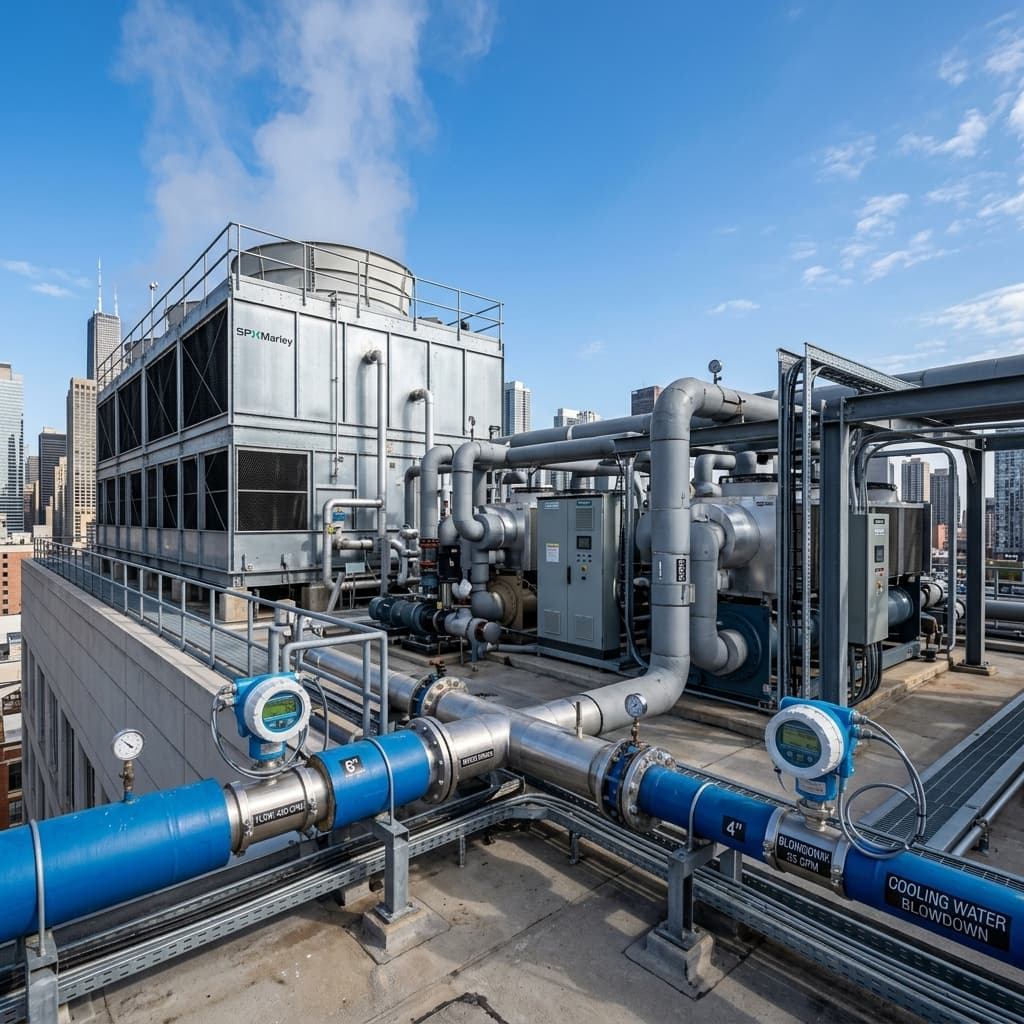
Often, yes. Utilities usually bill sewer charges on all the water you buy. If water evaporates in a cooling tower or chiller, or goes into a product, a MaxLinc cellular deduct meter measures that non-discharged volume to support a sewer credit application.
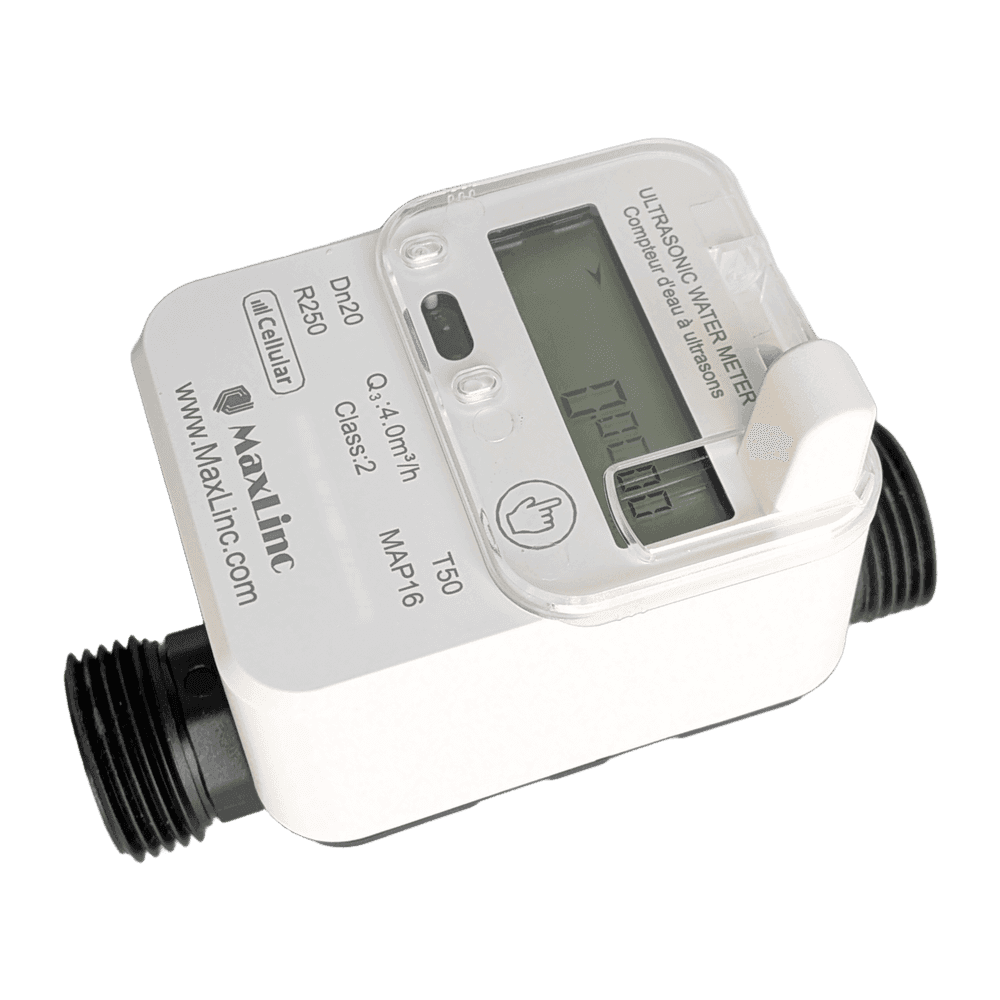
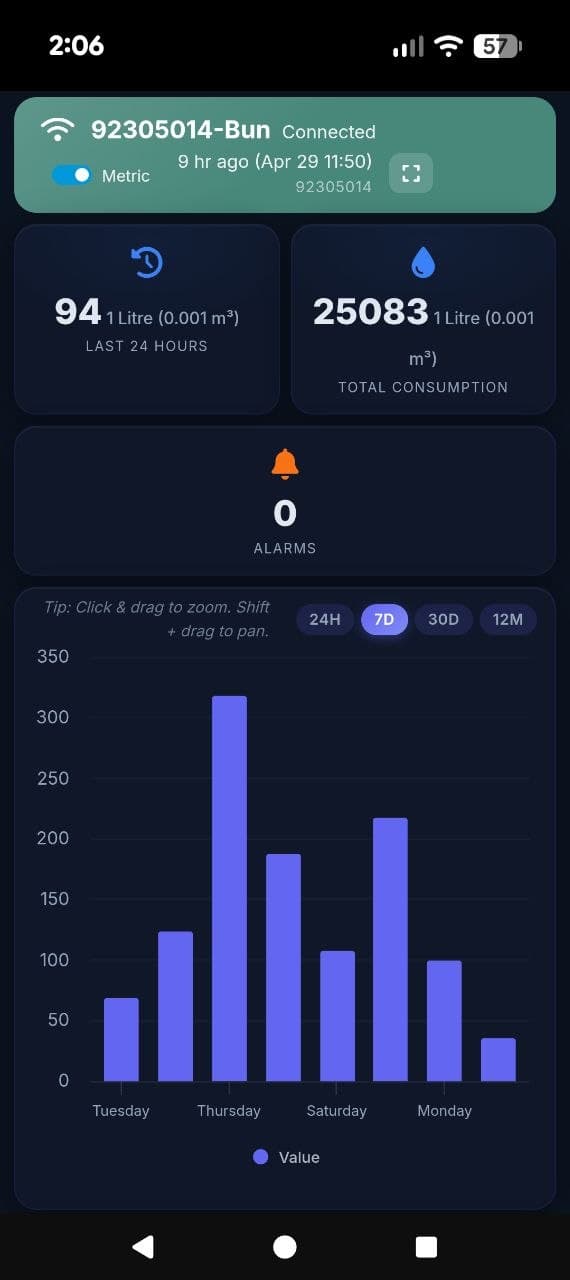
Zero site IT, zero customer WiFi needed. Readings transmit over cellular straight to your phone & tablet.
Why your sewer bill assumes every drop goes down the drain
It is not an error. It is a default — and for most buildings it is roughly right. The question is whether it is right for yours.
Almost no municipality meters your sewer discharge directly. Metering wastewater at every service connection would cost more than it recovers, so utilities do the practical thing: they bill sewer as a function of the water you bought. Sometimes that is a fixed percentage of the water charge, sometimes a flat multiplier on metered volume, sometimes a blanket reduction applied to every account. In each case the arithmetic starts from intake, because intake is the only number they actually measure.
of the water rate is what Toronto charges as the sewer surcharge on discharged water
City of Toronto, 2026
Calgary bills business wastewater volume as metered water multiplied by 0.90, applied year-round to every business account
City of Calgary, 2026
of municipal water was used by industrial, commercial, institutional and other non-residential customers in Canada — 26% of all water produced
Statistics Canada, 2021
Notice what Calgary’s blanket 10% reduction implies: the utility already concedes that not all of your water returns. It just applies the same assumption to a print shop and to a data centre with a cooling tower. If your operation is nothing like the average, the average is not in your favour — and the only way to move off it is to measure.
Where the water actually goes
Five honest verdicts. Two of these are strong cases, one depends entirely on your municipality, and one is usually not a credit case at all — we would rather say so here than after you have bought meters.
Cooling towers & evaporative condensers
Strongest case.Evaporation is the entire point of the equipment — heat leaves the building with the vapour, and that vapour never enters a sewer. EPA’s commercial guidance puts cooling towers at 20 to 50 percent or more of a facility’s total water use, which is why this is the case utilities have written the most rules about.
US EPA, WaterSense at Work §6.3, 2023
Breweries, food & beverage processing
Strong case, if you can measure the split.Water that leaves your gate inside the product does not leave through the drain. Toronto’s rebate program covers exactly this — it applies to water not discharged to the sanitary sewer, naming water evaporated from cooling towers or used to make a product.
City of Toronto, 2026
Irrigation & landscape
Depends entirely on the municipality.The original deduct meter. Summer irrigation on a commercial site can be a large share of annual consumption and none of it reaches the sanitary sewer. Read the fine print though: Toronto’s Sewer Surcharge Rebate explicitly excludes water used outdoors for irrigation, because irrigation is handled through a different route there. Ask your utility which of its programs covers you.
City of Toronto, 2026
Boiler make-up, steam & humidification
Worth asking about.Steam vented to atmosphere, lost to a process, or delivered as building humidification is water that does not come back. Toronto’s application asks for boiler documentation alongside cooling tower documentation, so the route is recognised — but the volumes are usually smaller and the measurement is fussier than a tower loop.
City of Toronto, 2026
Laundromats & commercial laundry
Usually not a credit case. Still a metering case.Be careful here. A commercial laundry discharges very nearly everything it draws, so there is usually no evaporative volume to claim and a deduct meter will not move your sewer charge. The lever for a laundry is a different one: hour-by-hour consumption, catching a stuck fill valve or an overnight leak before a quarterly bill tells you, and checking a landlord’s square-footage allocation against what your unit actually used.
If your process is not on this list, describe it to us. The test is simple and it is physical: does the water leave the site by any path other than the sanitary sewer? If it does not, no meter will help you, and we will tell you that.
What a deduct meter actually has to demonstrate
This is the part most vendors skip, and it is the part a reviewer will go straight to.
A meter on the make-up line does not measure evaporation. Make-up is everything the loop consumes, and EPA’s guidance breaks it into four terms: evaporation, drift, blowdown, and leaks or overflows. Blowdown is deliberately sent to the sewer. Drift and leaks are not evaporation either. So a single make-up meter systematically overstates the volume you can defensibly claim — which is precisely the objection a utility reviewer is trained to raise.
Make-up = evaporation + drift + blowdown + leaks & overflows
Only the first term left your site as vapour. The third went to the sewer you are being billed for.
Meter the make-up line
Everything entering the tower or boiler loop. Make-up feeds typically run on branch lines, which is exactly where DN20 (3/4") and DN25 (1") fit.
Meter the blowdown line
The bleed that goes to the drain. Subtracting a measured blowdown from a measured make-up is what converts an estimate into a claim — and it is why a deduct project is usually two meters, not one.
Log continuously, not once
Credit programs are assessed over a period, not from a spot reading. Both meters report over their own cellular link on a schedule and hold 24 months of frozen historical data plus the last 36 days on board, so a gap in the cellular record is not a gap in the data.
Export the record
Daily, weekly, monthly or a rolling window, exported to Excel — for the original application, and again for every renewal the program requires.
Where estimates get pushed back
Evaporation is often estimated from heat load using an industry rule of thumb. A rule of thumb is not a measurement, and a reviewer is entitled to say so — particularly on a renewal, when your load has changed and the estimate has not. Two meters and a continuous record replace an argument about assumptions with arithmetic anyone can check.
One more number worth knowing before you call
Cycles of concentration — the ratio of dissolved solids in your blowdown to those in your make-up — determines how much you have to bleed. Running more cycles means less blowdown, which means less water to the sewer and a larger evaporative share. Metering both lines gives you that ratio as an operating number rather than a setpoint you inherited, which tends to be worth something whether or not the credit application succeeds.
Eligibility and credit rates are set by your municipality. Not by us.
There is no national sewer credit program in Canada. There are hundreds of municipal ones, and they disagree with each other on almost everything — whether a route exists, what it is called, what it will accept as proof, and what it is worth.
Below are three real Canadian examples that happen to sit at three different points on that spectrum. Read them as evidence that you must confirm locally, not as a preview of your own answer.
Toronto, ON
- How sewer is charged
- Sewer surcharge is 57% of the water rate (City of Toronto, 2026).
- Deduct / credit route
- Yes — the Sewer Surcharge Rebate Program, for ICI customers, on water not returned to the sanitary sewer.
- What it asks for
- Forms stamped and certified by an independent licensed Professional Engineer of Ontario; every process diverting water from the sanitary sewer must be sub-metered; discharge must fall below a threshold that scales with volume — 80% at up to 1,500 m³ (396,000 US gal) a year, rising to 95% above 1,500,000 m³ (396,000,000 US gal). Applications are due within nine months of the letter of intent, and renewals by February 1 (City of Toronto, 2026).
Vancouver, BC
- How sewer is charged
- Sanitary sewer user charges are tied to metered water use.
- Deduct / credit route
- Yes — provided for under the City’s Sewer and Watercourse By-law No. 8093.
- What it asks for
- Proof of the loss, and a meter or measuring device the City approves for the purpose. Confirm the current procedure and forms with the City before you specify anything (City of Vancouver, By-law No. 8093).
Calgary, AB
- How sewer is charged
- Business wastewater volume is metered water × 0.90, applied year-round (City of Calgary, 2026).
- Deduct / credit route
- No separate deduct or evaporation credit route is published — the 10% reduction is already applied to every business account.
- What it asks for
- Nothing to apply for. Also nothing further to claim. If you evaporate far more than 10% of intake, that is a conversation to have with the utility rather than an application to file.
Your municipality
- How sewer is charged
- Find the sewer or wastewater line on your bill and the rate behind it.
- Deduct / credit route
- Ask directly. The names vary: deduct meter, sewer credit, evaporation credit, sewer surcharge rebate, industrial water rate.
- What it asks for
- Ask three questions before you buy anything: is there a route, what metering standard does it require, and what record interval will you accept? We will send the datasheet for you to hand over.
| Municipality | How sewer is charged | Deduct / credit route | What it asks for |
|---|---|---|---|
| Toronto, ON | Sewer surcharge is 57% of the water rate (City of Toronto, 2026). | Yes — the Sewer Surcharge Rebate Program, for ICI customers, on water not returned to the sanitary sewer. | Forms stamped and certified by an independent licensed Professional Engineer of Ontario; every process diverting water from the sanitary sewer must be sub-metered; discharge must fall below a threshold that scales with volume — 80% at up to 1,500 m³ (396,000 US gal) a year, rising to 95% above 1,500,000 m³ (396,000,000 US gal). Applications are due within nine months of the letter of intent, and renewals by February 1 (City of Toronto, 2026). |
| Vancouver, BC | Sanitary sewer user charges are tied to metered water use. | Yes — provided for under the City’s Sewer and Watercourse By-law No. 8093. | Proof of the loss, and a meter or measuring device the City approves for the purpose. Confirm the current procedure and forms with the City before you specify anything (City of Vancouver, By-law No. 8093). |
| Calgary, AB | Business wastewater volume is metered water × 0.90, applied year-round (City of Calgary, 2026). | No separate deduct or evaporation credit route is published — the 10% reduction is already applied to every business account. | Nothing to apply for. Also nothing further to claim. If you evaporate far more than 10% of intake, that is a conversation to have with the utility rather than an application to file. |
| Your municipality | Find the sewer or wastewater line on your bill and the rate behind it. | Ask directly. The names vary: deduct meter, sewer credit, evaporation credit, sewer surcharge rebate, industrial water rate. | Ask three questions before you buy anything: is there a route, what metering standard does it require, and what record interval will you accept? We will send the datasheet for you to hand over. |
Summary only, current to 2026, and not legal, engineering or tax advice. Programs change, and a municipality can end or rewrite one at any time. Confirm your own eligibility and credit rate with your water utility before you commit to a purchase.
Cooling Tower Evaporative Loss Metering
Record water intake vs. blowdown loss on cellular telemetry to support municipal sewer credit applications.
What we will not tell you: your payback period
Every other page in this category leads with one. We think that number is unknowable from here, and quoting it would be a sales tactic rather than an answer.
A payback figure needs four inputs. A meter supplies exactly one of them. The other three belong to your municipality and your process, and we have no honest way to guess them from a landing page. So here is the arithmetic itself — fill in your own values and you will know more than any brochure can tell you.
Deductible volume
Measured make-up minus measured blowdown over the billing period. This is the only term a meter gives you, and it is the reason to buy one.
Sewer rate
The per-cubic-metre sewer or wastewater charge on your bill. Toronto’s sewer surcharge is 57% of the water rate (City of Toronto, 2026). Yours will be different, and it is on your invoice.
Eligibility
Whether your municipality operates a credit route at all, and whether your discharge falls under its threshold. Entirely theirs to decide.
Cost to qualify
Meters, installation, and in some programs an engineer’s certification — Toronto requires forms stamped by a licensed Professional Engineer of Ontario (City of Toronto, 2026).
Annual credit ≈ V × R × 12 — but only if E is yes, and only net of C.
Confirm E before you spend anything on V.
Call your water utility first. If there is no credit route in your municipality, a deduct meter will not reduce your sewer charge, and we would much rather you heard that from us than discovered it after the install. There is still a real case for metering the loop in that situation — you will find leaks, you will see blowdown control drifting, and you will stop guessing at your own consumption — but it is a different case, and we will make it to you as a different case.
Retrofit against what is already in the wall
Mechanical rooms are not designed around meter manufacturers. The reason deduct projects stall is almost never the meter — it is the pipework the meter demands.
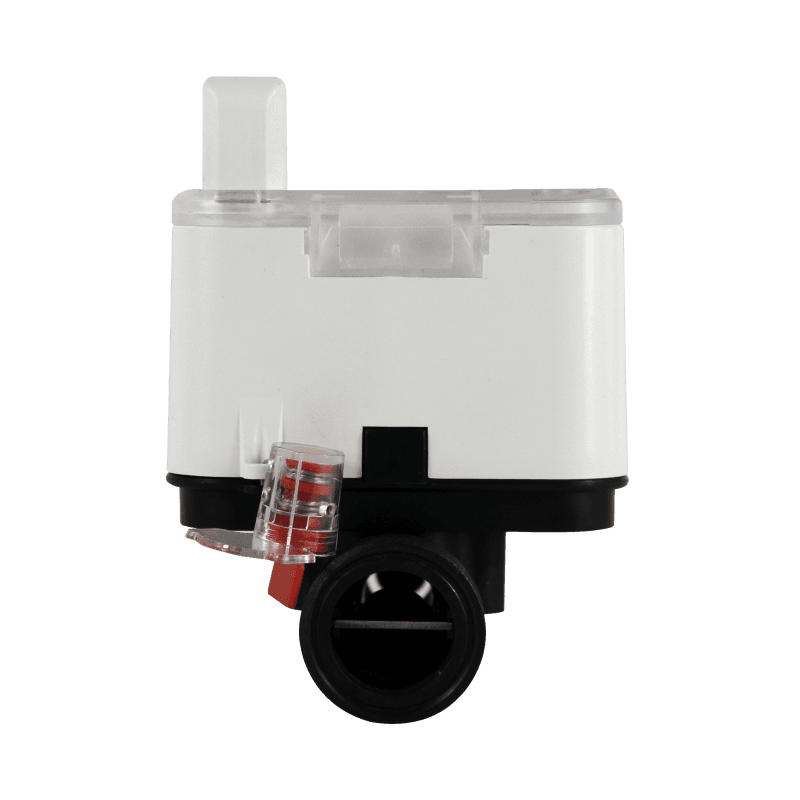
U0/D0 — no straight-pipe run
The flow-field sensitivity rating is U0/D0, meaning no required straight run of pipe upstream or downstream. It can sit directly against an elbow, a tee or a shutoff, which is what a real make-up line looks like.
No repiping, no re-routing
Legacy meters that demand five or ten pipe diameters of straight run force you to rebuild the branch to accommodate them. That rebuild — not the meter — is usually the line item that kills the project at approval.
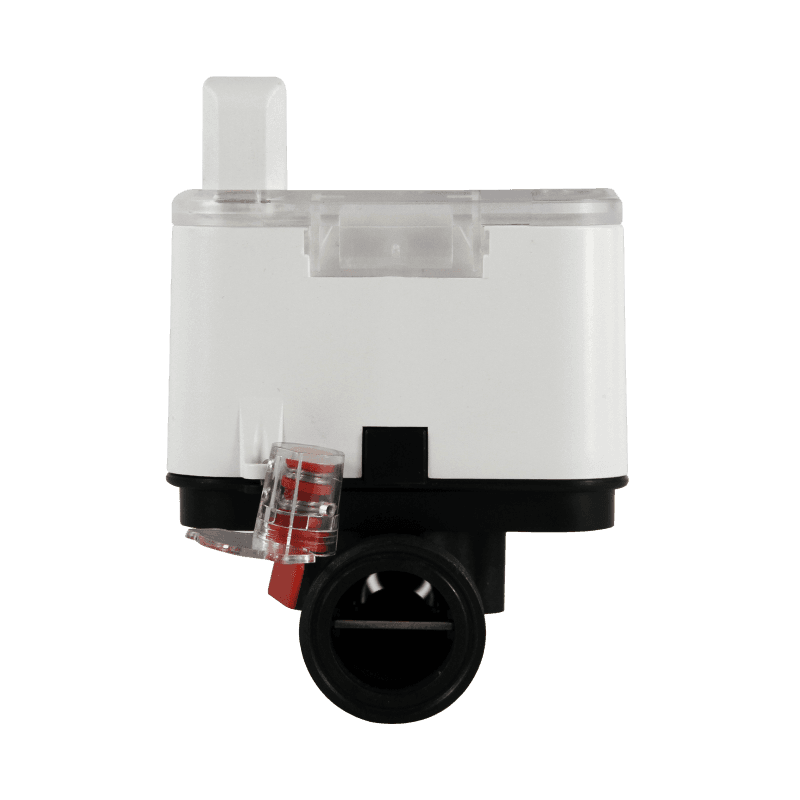
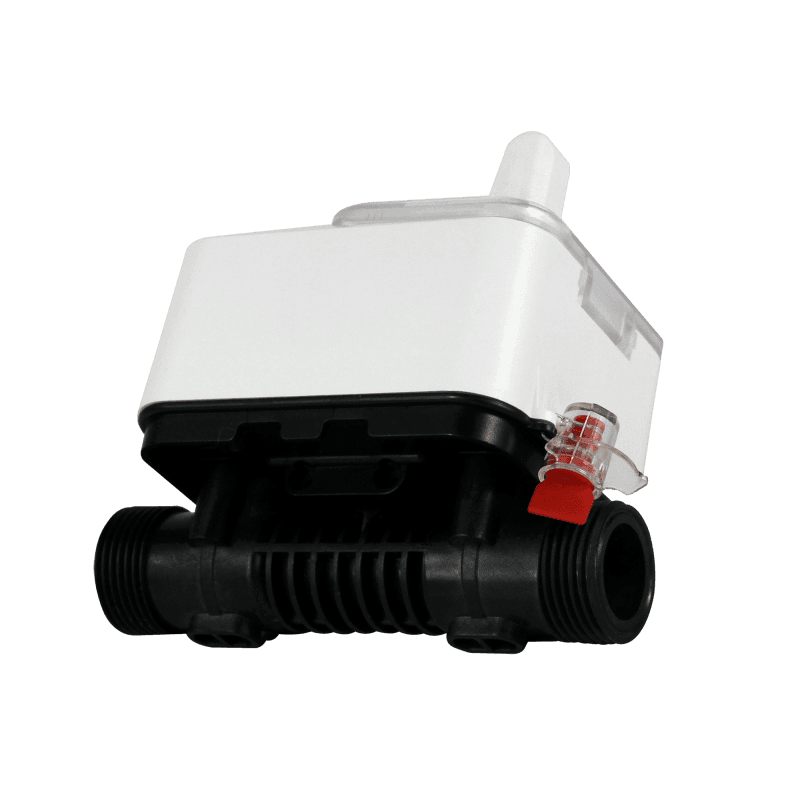
Threads inline on 3/4" and 1"
DN20 (3/4 in) with a 1" NPSM thread and DN25 (1 in) with a 1¼" NPSM thread. It is an inline threaded meter, so the line comes down for the fitting like any meter change; there is nothing to strap to the outside of a pipe.
Horizontal or vertical upward
Mount it whichever way the branch runs. Two-way metering with reverse-flow detection means a backfeed shows up as a backfeed rather than as consumption.
IP68, and rated for the room it lives in
Submersible and suitable for buried or flood-prone pits. MAP16 — 16 bar, 232 psi. Water 0.1 to 50 °C (32.2 to 122 °F), ambient −25 to +55 °C (−13 to +131 °F), which covers an unheated mechanical space or an outdoor enclosure.
No moving parts in the water
Ultrasonic transit-time sensing, so there is no piston, disc or turbine to seize on tower water chemistry — and no mechanical wear to gradually under-register the volume your claim depends on.
Have your mechanical contractor confirm the make-up and blowdown line sizes before you order. If either is larger than 1", tell us — these meters are DN20 and DN25 only, and we would rather turn the sale down than sell you a meter that does not fit.
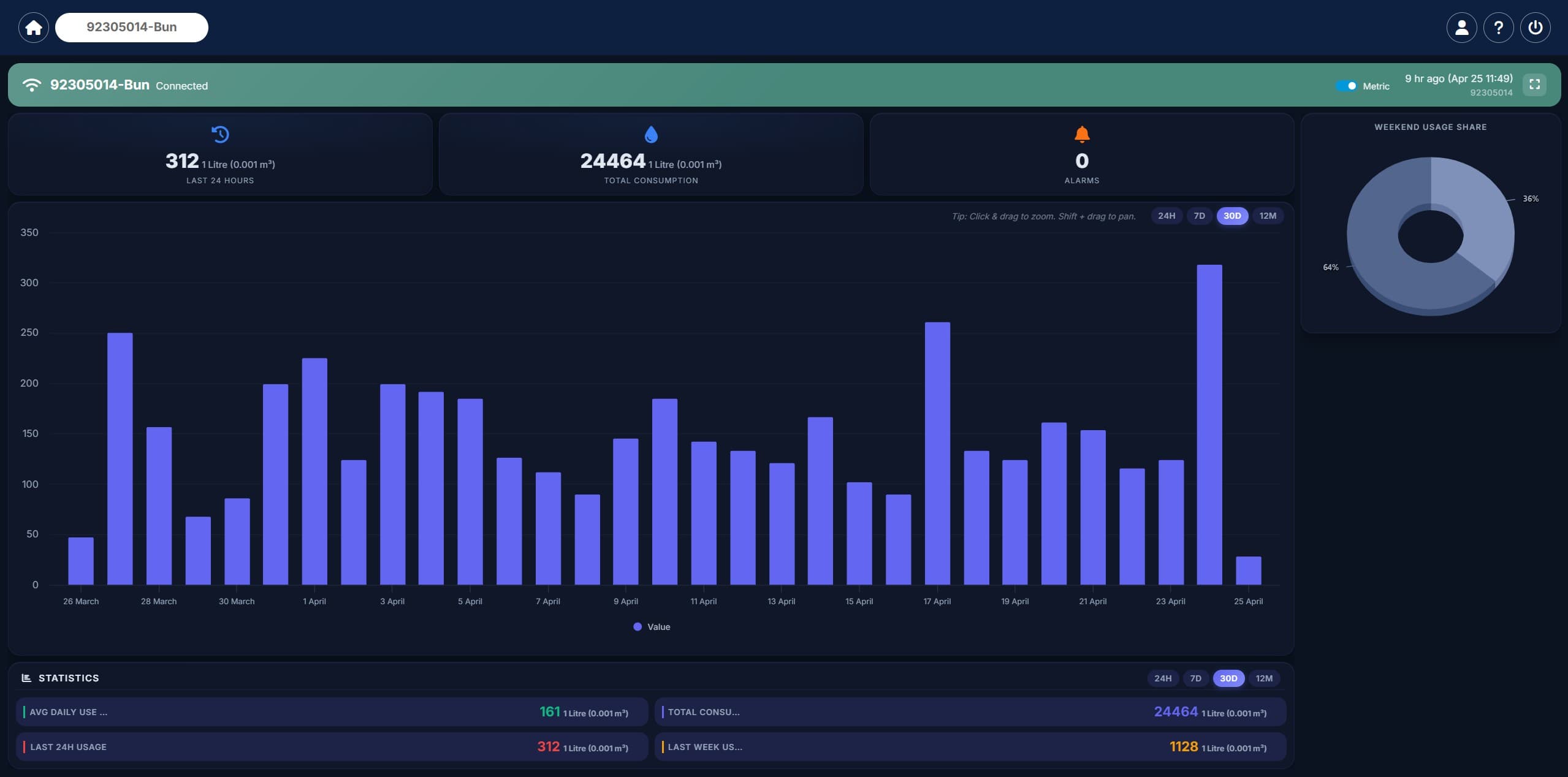
The meter is the evidence. The app is where the evidence lives.
A credit application is a records exercise. What you are really buying is a defensible history you did not have to keep by hand.
Automatic remote reads
No monthly walk-around, no clipboard, no transcription error in the one number your application rests on. Each meter reports its totals over cellular on a schedule.
Make-up minus blowdown, side by side
Put both meters on one screen and the deductible volume is a subtraction, not an engineering estimate. Compare periods, and drifting blowdown control shows up immediately.
Export for the application and the renewal
Daily, weekly, monthly, yearly or a rolling window, exported to Excel. Programs that require an annual renewal require the record again — that is a five-minute export rather than a project.
24 months on board
Every meter stores 24 months of frozen historical data plus the last 36 days locally. A cellular gap does not become a hole in your record.
Consumption and leak alarms
Continuous-flow, over-range, pipe-burst, leak and over-temperature detection. A leak on the make-up line is water you paid for twice — once as water, once as sewer.
No-upload and device-error alerts
You find out the week a meter went quiet, not at renewal time when you go to pull twelve months of data.
Unlimited users, no per-seat fee
Your facility manager, your water treatment contractor, your controller and the engineer certifying the forms can each have their own login.
Hosted in Canada
MaxLinc is a Canadian company with Canadian support, and your consumption data is stored in Canada.
No WiFi, no gateway, no wiring and no site IT. The meter carries an eSIM with unlimited international data, so it does not touch your building network or a tenant’s firewall — which also means nobody can accidentally take your evidence offline by changing a WiFi password.
Specifications
Send this to your utility before you buy. If their program specifies a metering standard you do not see here, tell us and we will give you a straight answer about whether we meet it.
- Measurement
- Ultrasonic transit-time, piezoelectric ceramic transducer — no moving parts
- Accuracy
- Class 2 — ±5% in the low zone (Q1 ≤ Q ≤ Q2), ±2% in the high zone (Q2 ≤ Q ≤ Q4)
- Metrological range
- R250 standard, R400 available
- Flow-field sensitivity
- U0/D0 — no straight-pipe run required upstream or downstream
- Sizes
- DN20 (3/4 in, 1" NPSM thread) · DN25 (1 in, 1¼" NPSM thread)
- Permanent flow Q3
- 4.0 m³/h (17.6 US gal/min) on DN20 (3/4 in) · 6.3 m³/h (27.7 US gal/min) on DN25 (1 in)
- Overload flow Q4
- 5.0 m³/h (22.0 US gal/min) on DN20 (3/4 in) · 7.875 m³/h (34.7 US gal/min) on DN25 (1 in)
- Starting flow
- 0.0025 m³/h — 2.5 L/h (0.66 US gal/h) on DN20 (3/4 in) · 0.004 m³/h — 4 L/h (1.06 US gal/h) on DN25 (1 in)
- Resolution
- 0.0001 m³ (0.1 L, 0.03 US gal)
- Metering direction
- Two-way, with reverse-flow detection
- Onboard storage
- 24 months of frozen historical data plus the last 36 days
- Fault detection
- Low battery, reverse flow, over-range, empty pipe, pipe burst, leak, over-temperature
- Max pressure
- MAP16 — 16 bar (232 psi). Pressure loss class Δp63
- Water temperature
- 0.1–50 °C (32–122 °F), class T30/T50
- Operating ambient
- −25 to +55 °C (−13 to +131 °F)
- Ingress protection
- IP68 — submersible, suitable for buried and flood-prone pits
- Orientation
- Horizontal or vertical upward
- Connectivity
- Cellular, built-in eSIM, unlimited international data
- Battery
- Sealed 3.6 V lithium, more than 6 years
- Display
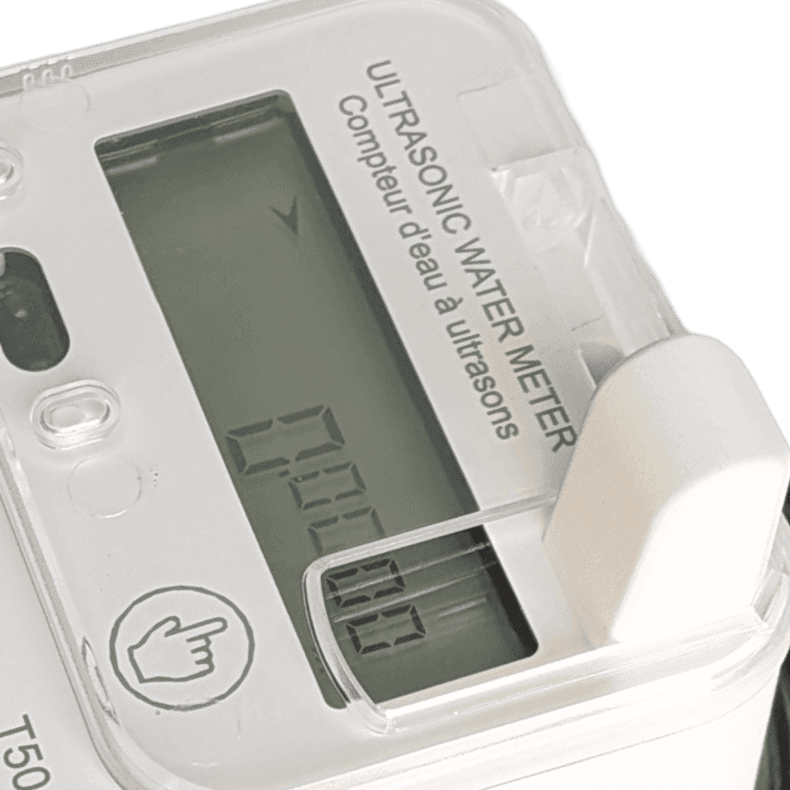
- Multi-view LCD with a single touch button
Water meters are exempt from Measurement Canada’s approval and initial inspection requirements, so no water meter sold in Canada carries a federal seal for water. Water billing authority in Canada is provincial and municipal, not federal.
Meter product pages:
If a tenant is involved, read this first
Some of these sites are leased, and a deduct meter that clarifies a landlord’s allocation is a common reason to install one. Be careful about what you do with the number afterwards. Charging a residential tenant by consumption is genuinely restricted in Canada and the rules are provincial: Ontario’s Residential Tenancies Act ss. 137–138 caps apportioning at six units, Quebec is restricted, British Columbia requires the terms to be in the tenancy agreement (RTB Policy Guideline 22), and Alberta follows the lease. Commercial leases are their own contract question. Metering, monitoring and cost-allocation analysis are available everywhere; billing is not. Confirm with your own counsel before you change how anyone is charged.
Tell us what evaporates
We will tell you what to ask your utility, what to meter, and whether we actually fit your lines — before anyone talks about a quote.
Start a deduct meter conversation
No guide download, no drip sequence. A person reads this and replies. If your municipality has no credit route, or your lines are bigger than we fit, that is what the reply will say.
This is the deep version of one section of a bigger page
Deduct meters and sewer credits are one use of the same cellular ultrasonic meter. If you also need suite submetering, municipal metering, leak detection, remote sites, the provincial billing rules, or the full product gallery and owner’s manual, the main water metering page covers all of it.
Go to cellular water meteringThe questions this page gets asked
Will a deduct meter actually lower my bill?+
Only if three things are true: your municipality operates a credit or deduct route, your process genuinely sends water somewhere other than the sanitary sewer, and you can measure that volume in a way the utility accepts. The meter solves the third. It cannot solve the first two, and any vendor who tells you otherwise has not read your utility’s rules. Call your water utility before you buy anything.
Do I need one meter or two?+
For a cooling tower loop, usually two. Make-up water is evaporation plus drift plus blowdown plus leaks (US EPA, WaterSense at Work §6.3, 2023), and blowdown goes to the sewer you are billed for. Metering make-up alone overstates your claim; metering make-up and blowdown separately turns the deductible volume into a subtraction a reviewer can check. For a straightforward irrigation feed that never touches the sanitary sewer, one meter on that feed is normally the whole job.
My municipality is not Toronto, Vancouver or Calgary. Do you know my program?+
No, and we will not pretend to. There are hundreds of Canadian municipal utilities and the programs vary in name, eligibility, proof standard and value. What we can do is tell you what to ask for — a route, a metering standard, and a record interval — and send you a datasheet to hand over. If your utility replies with a specification, forward it and we will tell you honestly whether we meet it.
Will the city accept a meter that is not their own?+
That is exactly the question to put to them in writing, and the answer varies. Some programs require sub-metering of every process diverting water from the sanitary sewer and certification by a licensed engineer — Toronto requires forms stamped by an independent licensed Professional Engineer of Ontario (City of Toronto, 2026). Others simply require a measuring device the City approves. Get the requirement first, then specify the meter.
Do I have to repipe the make-up line?+
No. The flow-field sensitivity rating is U0/D0, which means no straight run of pipe is required upstream or downstream — it can sit directly against an elbow, tee or shutoff. It is an inline threaded meter in DN20 (3/4") and DN25 (1"), so the line comes down for the fitting exactly as it would for any meter change. Install it horizontally or vertically upward.
Can it live in a pit, a vault or an outdoor enclosure?+
Yes. IP68 rated, suitable for submersion and buried installation, ambient −25 to +55 °C (−13 to +131 °F). The thing to watch is signal rather than water: a steel lid or a deep concrete vault can block cellular, so keep the meter near grade and tell us the enclosure when you ask for a coverage check.
How long does the battery last, and what happens then?+
The sealed 3.6 V lithium cell is rated for more than six years, and you get a low-battery alert well ahead of end of life, so the work is planned on your schedule rather than a gap in the record you need for a renewal. The seal is what makes IP68 possible: it can be replaced (replacement battery CAD 59), but that means breaking the factory seal, so contact support first.
What does it cost after I buy it?+
Nothing for the first 5 years: there is no subscription fee, and the built-in eSIM includes unlimited international data, so there is nothing ongoing for the data link. From year 6 it is about $8.89 a year per meter (about 74¢ a month), billed annually, for the data plan, the app and Canadian cloud hosting. No contract, no revenue share, and the hardware is yours outright.
Can I get the data out in a form the application will accept?+
Reports export to Excel over any period — daily, weekly, monthly, yearly or a rolling window. Each meter also holds 24 months of frozen historical data plus the last 36 days on board, so a cellular gap does not become a hole in the record. Unlimited users means the engineer certifying your forms can pull the data themselves rather than waiting on you.
Is this meter approved by Measurement Canada?+
No water meter sold in Canada is. Water meters are exempt from Measurement Canada’s approval and initial inspection requirements — that exemption applies to every vendor, so treat any competing claim of federal certification for a water meter with suspicion. Water billing authority in Canada is provincial and municipal, not federal, which is why your credit application goes to your city rather than to Ottawa.
Can I bill a tenant from this meter?+
It depends on your province and it is genuinely restricted for residential tenancies — see the note above this FAQ. Ontario caps apportioning at six units under the Residential Tenancies Act ss. 137–138, British Columbia requires it in the tenancy agreement, Quebec is restricted and Alberta follows the lease. Commercial leases are a contract question of their own. Monitoring, leak detection and cost-allocation analysis are available to you everywhere; billing is a separate question for your counsel.
My make-up line is bigger than 1 inch. Do you fit?+
Not on that line. These meters are DN20 (3/4", 20 mm) and DN25 (1", 25 mm) and we are not going to sell you the wrong size to make a sale. It is worth measuring anyway — on many towers the blowdown line is considerably smaller than the make-up, so part of the loop may still be within range. Send us both sizes and we will tell you what we can and cannot do.
Start with the phone call, not the purchase order
Ask your utility whether a credit route exists and what it will accept as proof. Then tell us what they said, and we will tell you whether we fit — including when the answer is no.
MaxLinc Technology Solutions Inc., Vancouver BC. Canadian company, Canadian support, cloud hosted in Canada.